Design system & documentation
2024 project
A single source of truth documentation process for Waters design system named Fusion & how teamwork can drive success and beyond. Let’s dive in! 🤿

1/9
What is this case study about?
Fusion Design System – a year-long project in which I focused on creating the single source of truth documentation for Waters design system, maintaining and improving the design system, and fostering collaboration between design and development, all while prioritizing accessibility and radical simplicity.
This project is really special to me because I began as an intern, learned and grew along the way, and eventually became the only design system designer on the team, taking on full responsibility and offering support wherever needed.

My role: Product & design system designer
Project duration: One year
The product: Waters design system and documentation
About: Teamwork, design system, documentation and transparency
The impact: 72.2% increase in the number of applications utilizing the design system
Deliverables: Maintaining and improving the Fusion Design System UI components, visual identity and documentation
2/9
About Waters
Waters Corporation's products help scientists, researchers and lab technicians to analyze and understand the composition of substances in areas like medicine, food, water and materials.
For example, their tools can help check if a drug is pure and safe, detect contaminants in water or ensure food products meet quality standards.
Note: My work at Waters is confidential and some visuals, namings and details are changed.
3/9
What was my role?
As a design system designer, my primary role was to maintain and improve our design system and create up-to-date documentation, providing the entire organization with a single source of truth for implementing applications and software interfaces.
In addition to these responsibilities, I also facilitated collaboration between design and implementation by moderating weekly calls, organizing feedback sessions and leading brainstorming meetings to engage all team members and gather valuable insights.
The outcome
Our current documentation is scattered across multiple platforms. This means consumers have to search in different places to find the information they need - and do they even know where to look?
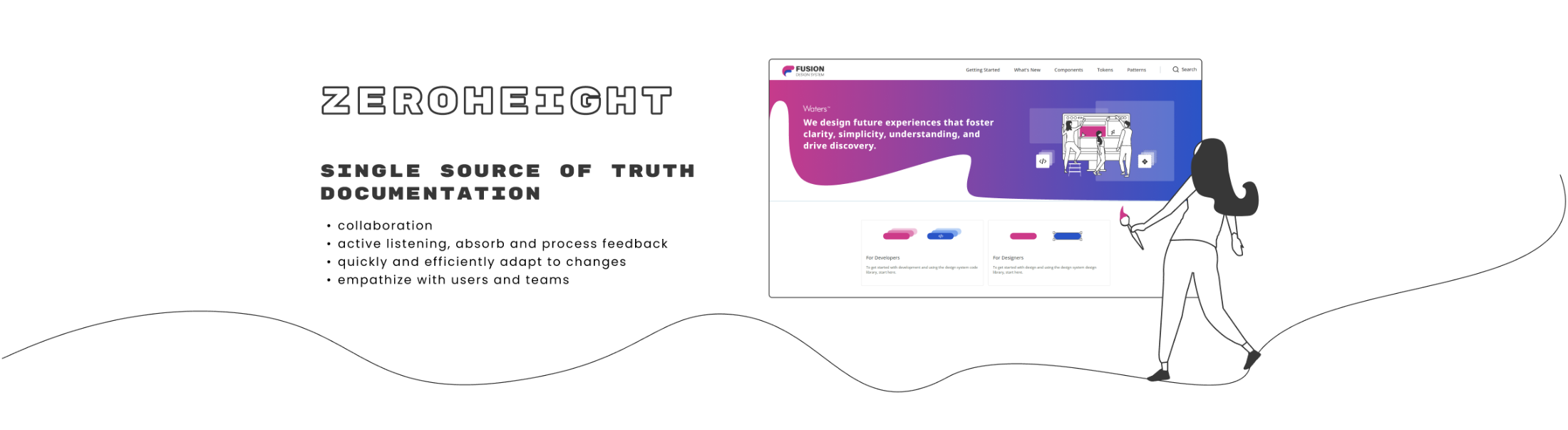
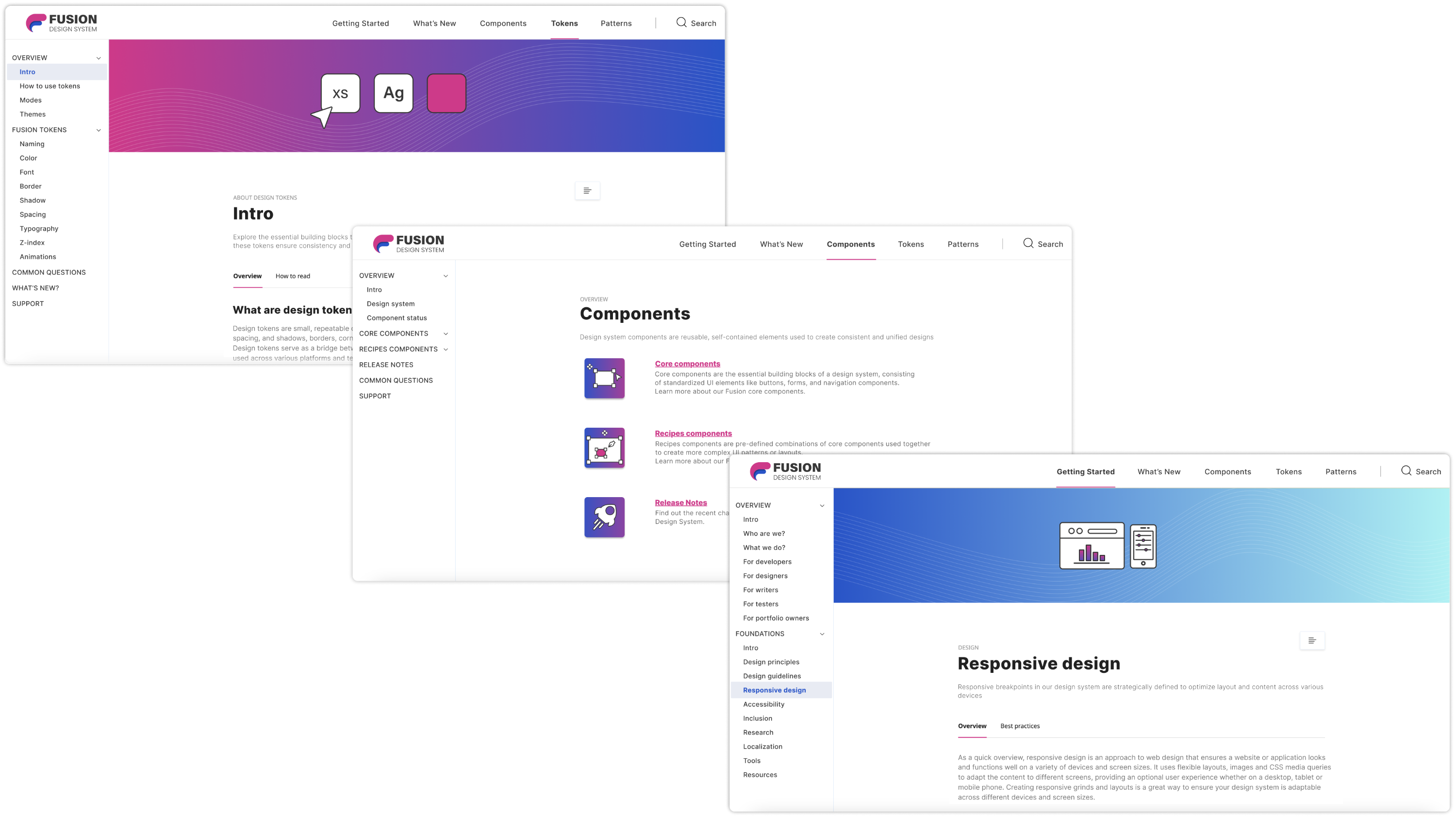
We managed to solve this issued by providing a single source of truth documentation in Zeroheight with all the informations our users need: design system components (design & code), design tokens, design patterns, our values, release notes, support, design foundations, accessibility, responsive design, best practices and much more.
4/9
What about team collaboration?
To enhance our design system and ensure up-to-date documentation, collaboration was essential and by pooling our expertise, we aimed to develop robust and reliable resources. With designers, developers and managers working across various applications, Sean and I took on the task of gathering this diverse informations and integrating their requirements into an easy to use and consistent design system and documentation.
Our users
In this case, our primary users are designers, frontend developers and the teams that are consuming the design system. The secondary tier of users consists of those who work daily with Waters applications in laboratories, for whom we conduct user observation testing to improve and add valuable features.
📌 Everything we do is for our users and consumers and we tailor our approach based on their needs and requires.
✍ We test the understandability and usability of each idea to help determine direction.
5/9
What was the main problem here?
Not all teams are using the design system, and those that want to start using it are facing the challenge of navigating through numerous information sources. Currently, we have a UI guide in Confluence, design components, wireframes, prototypes and examples in Figma and Zeplin, and implemented components along with other guidelines in Storybook.
That’s a lot, right? Should every team member be expected to know how to search through all these sources? How can we streamline this experience and save time for everyone, especially for the design system consumers, which frequently fields questions like “Where can I find this?” or ”Is this the latest version?".
What did I do wrong?
Of course, there were plenty of mistakes along the way, but the best way to learn is from them, right? Here are some of the most crucial ones:
📝 We didn’t had a technical writer assigned to this documentation from the start - I began and documented everything on my own.
📋 I didn’t establish a clear design process early enough - how do we build and test this documentation?
💔 Not all team members were involved in the design system process.
😑 I didn’t test enough with end users.

6/9
The challenges?
⭐️ The challenge was to create a single source of truth documentation by gathering information from all our applications, cases and teams.
🥅 The goal was to comprehensively cover everything that can help our users by providing guidelines, clear documentation and full implementation.
💡 Searching and testing if Zeroheight is the perfect space for us, and providing support and documentation that fit the needs of almost 30 teams - was indeed a huge deal.
Ok, ok - but what about the solution?
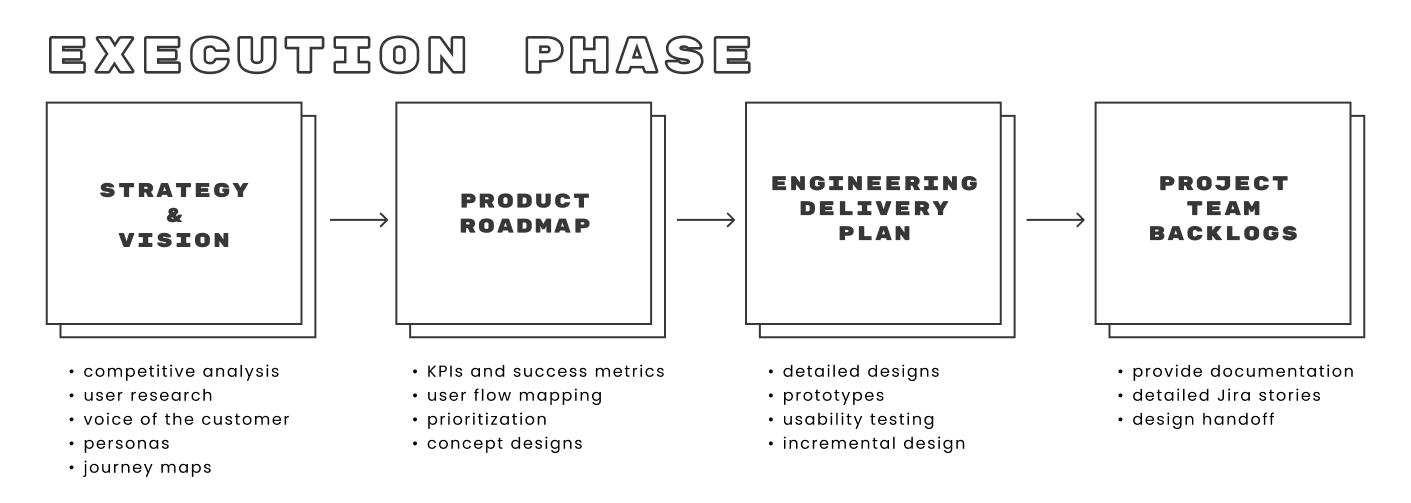
→ Schedule weekly calls focused on design work (to discuss iterations, issues, constraints and gather feedback).
→ Moderate weekly design-development calls (to discuss implementation feasibility, priorities, timelines and create Jira epics & stories).
→ Assign a technical writer, collaborate more with Sean and the managers in the product design team, to ensure a consistent voice and tone throughout the documentation.
→ Involve all team members in creative sessions, brainstorming, design reviews and design system updates.
→ Establish a clear process for designers looking to contribute to the design system - submitting requests, sharing ideas, creating branches, and gathering feedback from both the design and development teams.
→ Test more with users (testing new concepts and prototypes before implementation).
7/9
How was the engagement?
Launching new documentation was indeed a challenge. We needed to inform the entire company about our release, present all the benefits of using it and make it clear that this documentation would be the only one that is up to date and would have updated versions every quarter.
By having reliable support, a robust documentation and an up-to-date design system, the number of applications that are using the design system increased with 72,2%.

8/9
What was the biggest impact?
✅ Our solution simplified everything by creating a single source of truth, comprehensive documentation in Zeroheight where they can access all the needed informations.
🙌 We saved time, resources and money across the organization. We unsubscribed from irrelevant platforms and distributed the budget where it was needed most.
9/9
Reflections
→ Always test with users - you are designing for them and their needs.
→ A good process can speed up the entire workflow and encourage people to get involved.
→ Applying radical simplicity in your day-to-day work can save a lot of time for you and your users.
→ Each solution must be tailored to the specific problem at hand; every problem / solution is unique and should be treated accordingly.
→ The best work comes from teamwork, and the most amazing solutions emerge from brainstorming and sharing ideas.
→ I love my colleagues, I appreciate everything they did, all their hard work and open-mindedness. I learned a lot from them and without them, their guidance, teachings and patience, the final product would not have been as successful as it was. Thank you all!
→ Designing for business is crucial. We need to align design solutions with company goals and drive growth by enhance customer experiences.
→ You can’t solve everything or incorporate every single variant in your design system, you need to find a pattern and choose the most usable solution.
Just some conclusions
Having robust documentation and a design system is essential for enhancing performance and saving valuable time across the organization.
🧏♀️ By consistently advocating for accessibility, simplicity, consistency and transparency, we can achieve the best results, regardless of the project type. Moreover, the power of teamwork should never be underestimated - collaborating effectively can drive success beyond what we could achieve individually.
🤜 🤛 Together, these principles create a strong foundation for sustained organizational growth and success.
Thank you very much for your time!
© 2025 Designed and implemented by Ana